
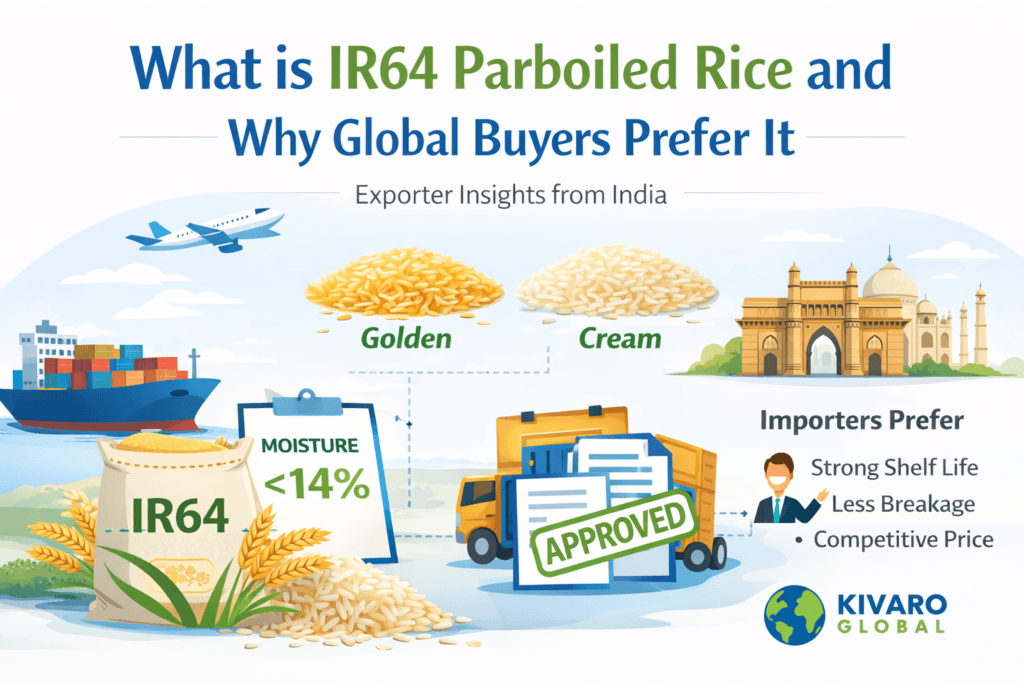
IR64 Parboiled Rice from India is one of the most widely traded non basmati rice varieties in global bulk markets. It is extensively consumed across Africa, parts of the Middle East, and other developing regions due to its durability, affordability, and strong cooking performance.
However, understanding IR64 Parboiled Rice requires more than knowing its name. Buyers must understand sourcing regions, moisture discipline, blending risks, freight sensitivity, and quality consistency.
If you are new to this trade, you may first read our detailed pillar guide on
IR64 non basmati rice exports from India to West Africa
That article explains the broader IR64 trade framework.
This article focuses specifically on IR64 Parboiled Rice.
Major Sourcing Regions in India
IR64 Parboiled Rice is primarily cultivated in:
• Chhattisgarh
• Gondia region in Maharashtra
• Kakinada belt in Andhra Pradesh
It is a multi crop variety, allowing consistent year round supply.
At Kivaro Global, sourcing diversification is important because relying on a single mill for bulk orders increases execution risk.
What Makes IR64 Parboiled Rice Different
Parboiling is a process where paddy is soaked and steamed while still in husk before milling. This process:
• Strengthens the grain
• Reduces breakage during milling
• Extends shelf life
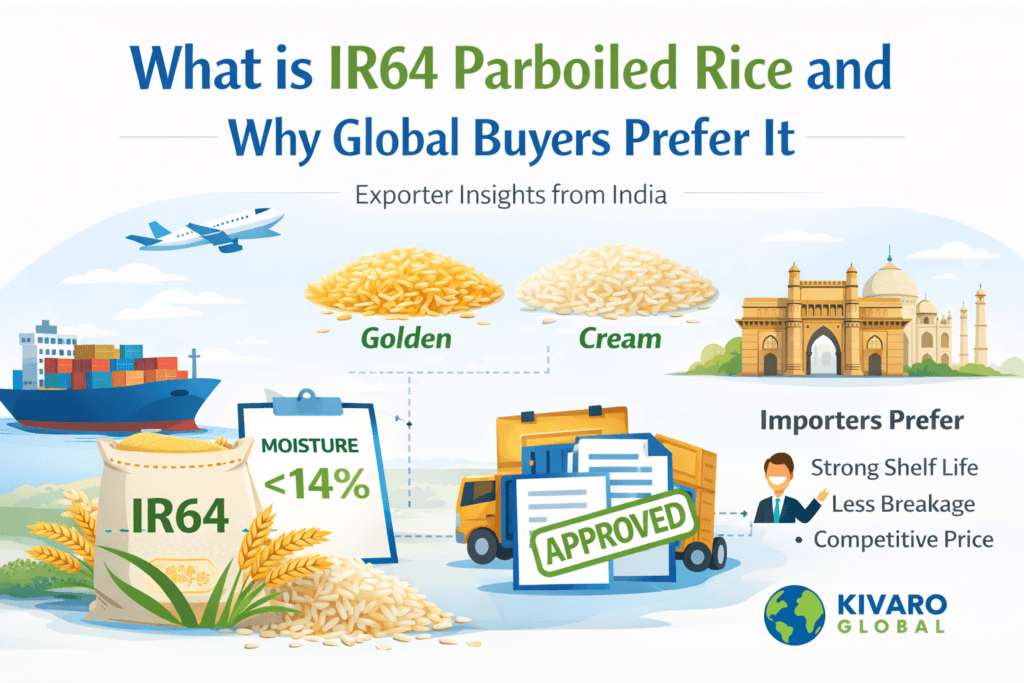
• Changes grain color to golden or cream
Mechanical drying is typically used after steaming. Before milling, paddy moisture is maintained around 15 to 17 percent. Final export moisture must be below 14 percent.
Moisture discipline is critical. High moisture can cause lump formation in bags and result in rejection.
For a technical breakdown, read our detailed guide on
moisture and broken percentage in IR64 rice
The Reality of Color Variation
One important industry truth is that color variation in IR64 Parboiled Rice is inevitable.
Different mills use different steaming pressures and machinery. As a result:
• Some lots appear more golden
• Some are lighter cream
• Slight variation can occur between batches
In West Africa, trading hubs such as Togo and Benin import in bulk and redistribute to neighboring countries. Color preference often depends on brand positioning rather than country alone.
Consistency within a brand matters more than exact shade.
The Biggest Quality Risk: Blending
Blending is one of the most common risks in IR64 Parboiled trade.
Unknown suppliers may offer low prices by mixing inferior lots, resulting in:
• Higher broken percentage
• Inconsistent grain size
• Poor milling finish
For African markets, 5 percent broken Sortex clean IR64 Parboiled Rice is among the most commonly demanded grades.
Excessive broken percentage leads to disputes, which is why third party inspection before shipment is recommended.
If you are planning your first shipment, also review our guide on
how to import IR64 rice from India step by step
Packaging and Container Planning
Standard loading practice:
• 25 metric tons in a 20 ft container
• 50 kg PP woven bags are most common
Fumigation documentation is mandatory. While moisture is not always checked at destination ports, documentation accuracy is essential to avoid customs delays.
Delayed shipment can occur due to port congestion, mill production delays, or logistical disruptions. Proper supplier coordination reduces this risk.
Price Structure and Freight Sensitivity
IR64 Parboiled Rice is a volume driven commodity with thin margins.
Major price drivers include:
• Government export policies
• Paddy availability
• Regional supply competition
• Freight rates
Freight alone can represent roughly 15 percent of CIF value under normal conditions. Sudden freight increases can eliminate export competitiveness.
In this segment, supplier stability matters more than chasing short term buyers.
Why Buyers Prefer IR64 Parboiled Rice
Global buyers prefer IR64 Parboiled Rice from India because:
• It withstands long sea transit
• It has strong shelf life
• It performs well in mass distribution markets
• It remains price competitive
Middle East demand is highly price sensitive, similar to Africa. Buyers negotiate aggressively initially, but once consistency is proven, long term relationships allow stable premium margins.
The Most Important Lesson in IR64 Parboiled Trade
New exporters often focus on finding buyers first.
The real priority should be building reliable supplier networks.
IR64 Parboiled Rice is capital intensive and margin sensitive. Without consistent sourcing, maintaining brand quality becomes impossible.
Consistency builds markets.
Inconsistency destroys them.
Why Work With a Structured Export Partner
At Kivaro Global, the focus is on:
• Multi region sourcing
• Volume stability
• Third party inspection support
• Custom labeling options
• Shipment consistency
• Understanding African trading hubs and buyer behavior
IR64 Parboiled Rice is not just a product. It is a supply chain discipline.
Explore more about our rice export solutions at
Pingback: How IR64 Parboiled Rice Export Price Is Calculated from Mill to CIF - Kivaro Global
Pingback: Where Should You Export IR64 Parboiled Rice in 2026? - Kivaro Global
Pingback: Third Party Inspection in IR64 Rice Exports | Buyer Quality Guide - Kivaro Global
Pingback: Why IR64 Parboiled Rice Dominates Global Non Basmati Rice Exports - Kivaro Global