
International rice trade is built on trust, but in reality trust alone is not enough. Buyers importing IR64 parboiled rice from India often deal with suppliers thousands of miles away. Once a container is shipped there is very little room for correction if the quality does not match the contract.
This is why third party inspection has become a standard practice in IR64 rice exports. Professional inspection agencies verify the quality of rice before shipment and ensure that the cargo meets the agreed specifications. For buyers importing from India, this small step can prevent costly disputes and protect the integrity of their supply chain.
At Kivaro Global, we always recommend third party inspection for buyers who are working with a supplier for the first time.
Why Third Party Inspection is Important in Rice Exports
Rice is a commodity where small quality differences can have a major impact on price and market acceptance. Buyers usually order rice based on specifications such as moisture level, broken percentage, grain length, and cleanliness.
Without inspection there is always a risk that the final shipment may not match the contract.
Some of the most common issues seen in international rice trade include
Rice blending with inferior quality rice
Higher broken percentage than agreed
Moisture above export standards
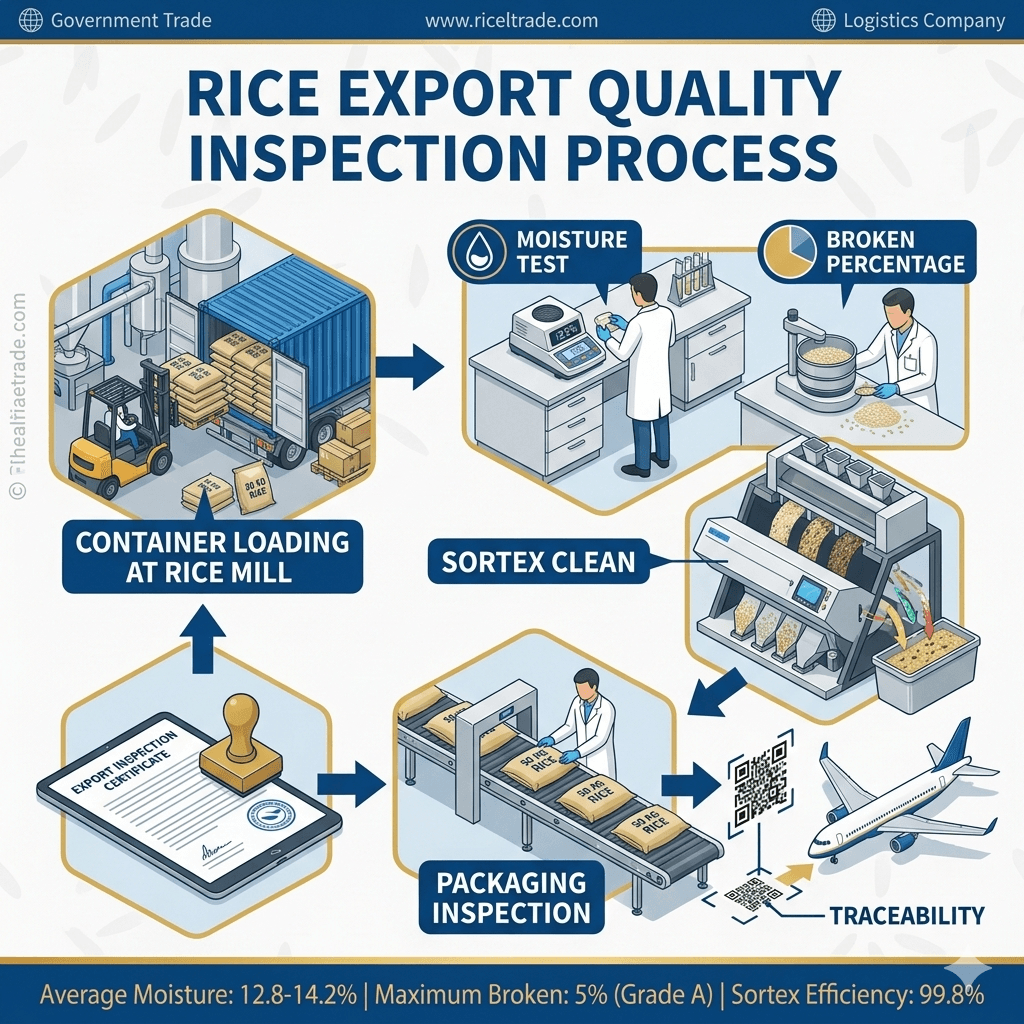
Fan cleaned rice supplied instead of sortex cleaned rice
These problems can create serious issues for importers, especially in markets where buyers rely on consistent quality.
For those who want to understand the basic characteristics of this variety, you can read our detailed guide on
What is IR64 Parboiled Rice and why global buyers prefer it
The Most Common Quality Fraud in IR64 Rice Exports
One of the biggest problems in rice exports is blending.
When exporters work with unfamiliar millers or unknown suppliers, there is always a risk that lower quality rice may be mixed with export grade rice to reduce cost.
The final shipment may look acceptable visually but the actual quality does not match the agreed specification.
This is why experienced exporters prefer working with known millers and still conduct inspection before stuffing containers.
Third party inspectors verify the lot before loading to ensure the cargo matches the contract.
Sortex Clean vs Fan Clean Rice
Many new buyers are not aware of the difference between sortex cleaned rice and fan cleaned rice.
Fan cleaning is a basic process where dust and light impurities are removed using airflow. However, it does not remove discolored grains or defective rice.
Sortex cleaning is a more advanced process where optical machines scan each grain and remove defective or discolored rice.
Most export quality IR64 rice is expected to be sortex clean.
If a supplier provides fan cleaned rice instead, the quality difference becomes visible after the cargo reaches the destination market.
This is another reason why inspection before shipment is critical.
Moisture Level and Shipment Rejections
Moisture is one of the most sensitive factors in rice exports.
The standard export moisture level for rice is usually below 14 percent. If moisture exceeds this level it can cause serious problems during transportation.
High moisture rice can develop lumps inside the bag during sea transit. In some cases mold or fungus can develop if the moisture is too high.
When shipments arrive with high moisture content buyers may reject the cargo or demand a credit note from the exporter.
If you want to understand how moisture affects rice pricing and quality, you can read our detailed explanation here
How moisture and broken percentage decide the real price of IR64 rice exports from India
Broken Percentage Verification
Broken percentage is another key parameter in rice exports.
For most African markets the standard specification is five percent broken sortex cleaned parboiled rice.
However, if rice is not inspected before shipment the broken percentage may exceed the agreed limit.
Even a small difference can affect the resale value of rice in destination markets.
Third party inspection agencies verify the broken percentage using standard sampling and laboratory methods before shipment approval.
When Third Party Inspection Happens
In most export transactions inspection takes place before container stuffing.
The inspection agency visits the mill or warehouse where the rice is stored. Samples are drawn from the lot and tested for various parameters.
Typical inspection checks include
Moisture level
Broken percentage
Foreign matter
Grain size and uniformity
Colour consistency
Packaging quality
Weight verification
Once the cargo meets the required specification the inspector issues a quality certificate.
This certificate is used by buyers as proof that the shipment meets the contract terms.
Which Inspection Agencies Are Trusted in Rice Trade
Two of the most widely trusted inspection agencies in global rice trade are
SGS
Bureau Veritas
Both companies have international inspection networks and follow standardized testing procedures.
Because of their credibility buyers across Africa, the Middle East, and Asia accept their inspection certificates.
The cost of inspection is usually around one hundred dollars per container and is typically paid by the buyer.
Compared to the value of a full container shipment, this cost is very small but the protection it provides is extremely valuable.
Why Inspection is Especially Important for First Time Buyers
For buyers who are importing rice from India for the first time, inspection is strongly recommended.
Once the shipment leaves the port it is almost impossible to correct quality issues. Importers must rely on the exporter’s commitment and quality control.
This is why many buyers combine third party inspection with suppliers who have experience in export markets.
You can read our step by step guide for international buyers here
How to import IR64 rice from India
Understanding the African Rice Market
Many shipments of IR64 parboiled rice from India are destined for West African trade hubs such as Benin and Togo. These markets serve as regional distribution centers where traders from neighboring countries procure rice.
Because these markets are highly competitive, maintaining consistent quality is essential for importers.
If you want to understand the structure of the African rice trade, you can read our market analysis here
IR64 Non Basmati Rice exports from India to West Africa
Rice exports operate on thin margins and large volumes. A single shipment with incorrect specifications can create financial losses for both exporters and importers.
Third party inspection acts as a safety layer in international rice trade. It ensures that the cargo being shipped actually matches the contract and protects both sides from disputes.
For buyers importing IR64 parboiled rice from India, inspection is a simple but powerful tool to maintain supply chain reliability.
At Kivaro Global we encourage buyers to verify every shipment through trusted inspection agencies so that quality remains consistent across every container delivered.
Pingback: How Freight and Logistics Affect IR64 Rice Export Prices from India - Kivaro Global