
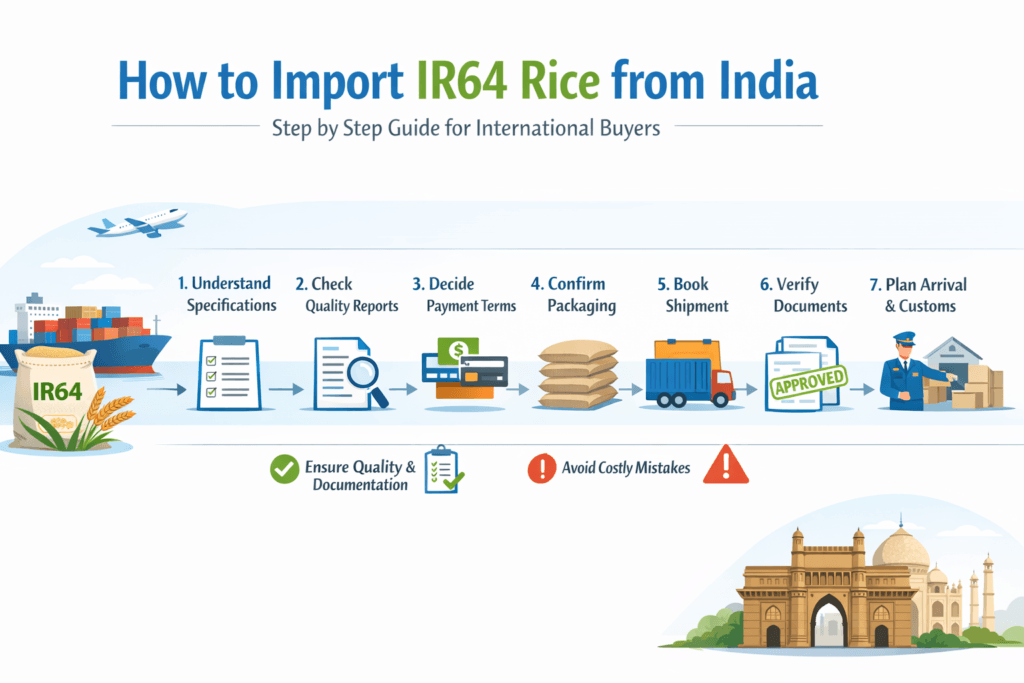
Importing rice from India can be highly profitable if done correctly. However, many first time buyers underestimate the importance of documentation, quality checks, and shipment planning.
This guide explains the complete step by step process of importing IR64 rice from India for buyers across Africa, Middle East, Asia, and other global markets.
If you are new to Indian rice trade, this article will help you avoid costly mistakes.
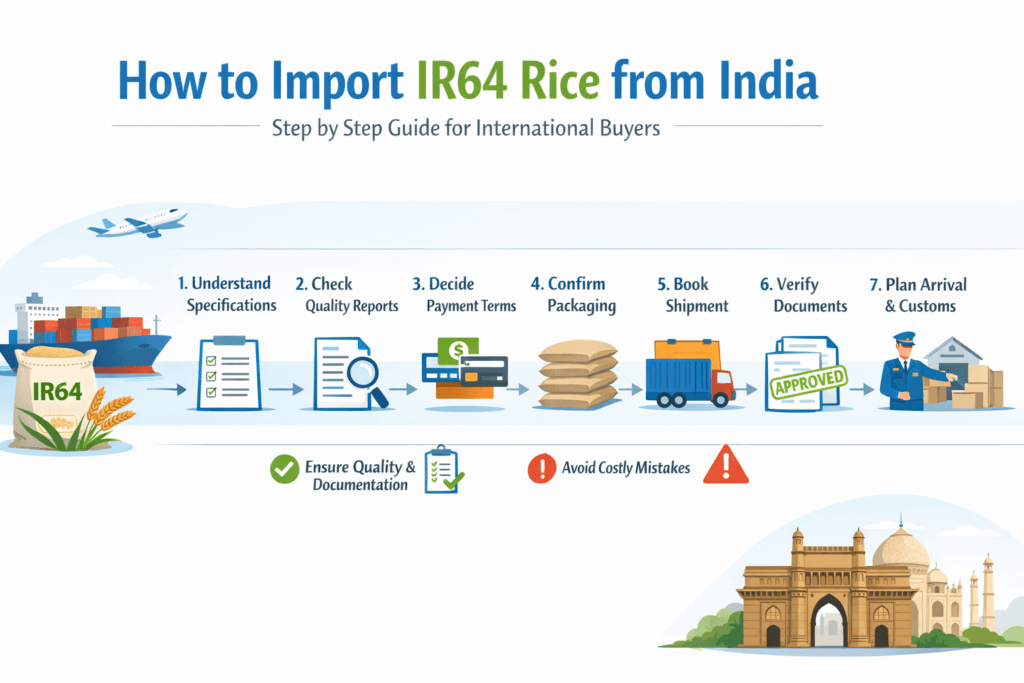
Step 1: Understand the Product Specification
Before discussing price, you must clearly define quality parameters.
For IR64 rice, key specifications include:
• Broken percentage
• Moisture percentage
• Grain length and appearance
• Milling quality
• Crop year
• Packaging type
Many disputes in rice trade happen because buyers and sellers never aligned on these parameters.
If you are unfamiliar with these technical details, read our detailed guide on IR64 non basmati rice exports from India to West Africa here:
Even if you are importing to another region, the quality principles remain the same.
Step 2: Request Quality Documents Before Payment
Serious exporters should provide:
• Proforma invoice
• Product specification sheet
• Moisture report
• Broken percentage report
• Crop declaration
Moisture and broken percentage directly affect pricing and shelf life. A small variation can change final landed value significantly.
If you want a deeper understanding of how these parameters influence price and risk, read our article on moisture and broken percentage in IR64 rice.
Never finalize payment without verifying these details.
Step 3: Decide on Payment Terms
Common payment methods in rice trade include:
• Letter of credit
• Advance payment
• Part advance and balance against documents
• Documents against payment
First time buyers usually prefer letter of credit for safety, though it may increase banking cost.
Choosing the right payment structure depends on trust level and transaction size.
Step 4: Confirm Packaging and Marking
Packaging must match your market requirements.
Options typically include:
• 5 kg retail bags
• 10 kg bags
• 26 kg bags(25 Kg bags Have GST)
• 50 kg PP woven bags
Bag marking should include:
• Brand name
• Country of origin
• Net weight
• Crop year
• Exporter details
Improper marking can cause customs delays.
Step 5: Book Shipment and Confirm Container Planning
Rice is generally shipped in 20 foot containers.
Key considerations:
• Container loading weight
• Port of loading in India
• Transit time
• Fumigation requirement
• Insurance
Humidity control during stuffing is important to maintain quality during transit.
Use Silica Gel bags 15-20 Kg per container
Proper Crafting of the Container is necessary.
Step 6: Verify Export Documentation
Before shipment, ensure the exporter provides:
• Commercial invoice
• Packing list
• Bill of lading
• Certificate of origin
• Phytosanitary certificate
• Fumigation certificate
These documents are required for customs clearance in most countries.
Step 7: Plan Destination Clearance and Storage
Before the vessel arrives:
• Appoint a customs clearing agent
• Prepare import permit if required
• Arrange warehouse space
• Plan local distribution
Delays at destination increase demurrage and storage costs.
Common Mistakes First Time Rice Importers Make
- Choosing lowest price without checking quality
- Ignoring moisture and broken specifications
- Weak documentation review
- No inspection before shipment
- Poor communication on bag marking
Avoiding these mistakes protects your margin.
Why Work with an Experienced Export Partner
Rice trade is simple on paper but complex in execution.
An experienced exporter ensures:
• Quality consistency
• Proper documentation
• Transparent communication
• Shipment planning support
• Reduced risk of disputes
At Kivaro Global, we focus on structured export processes rather than transactional selling. Our approach supports buyers across multiple markets with clear quality alignment and documentation transparency.
Learn more about our export capabilities at
Final Thoughts
Importing IR64 rice from India can be highly profitable when done professionally.
The key is clarity in specifications, strict documentation review, and choosing a reliable export partner.
Buyers who treat rice trade as a structured process build long term supply chains. Those who treat it as a one time price negotiation often face unexpected losses